
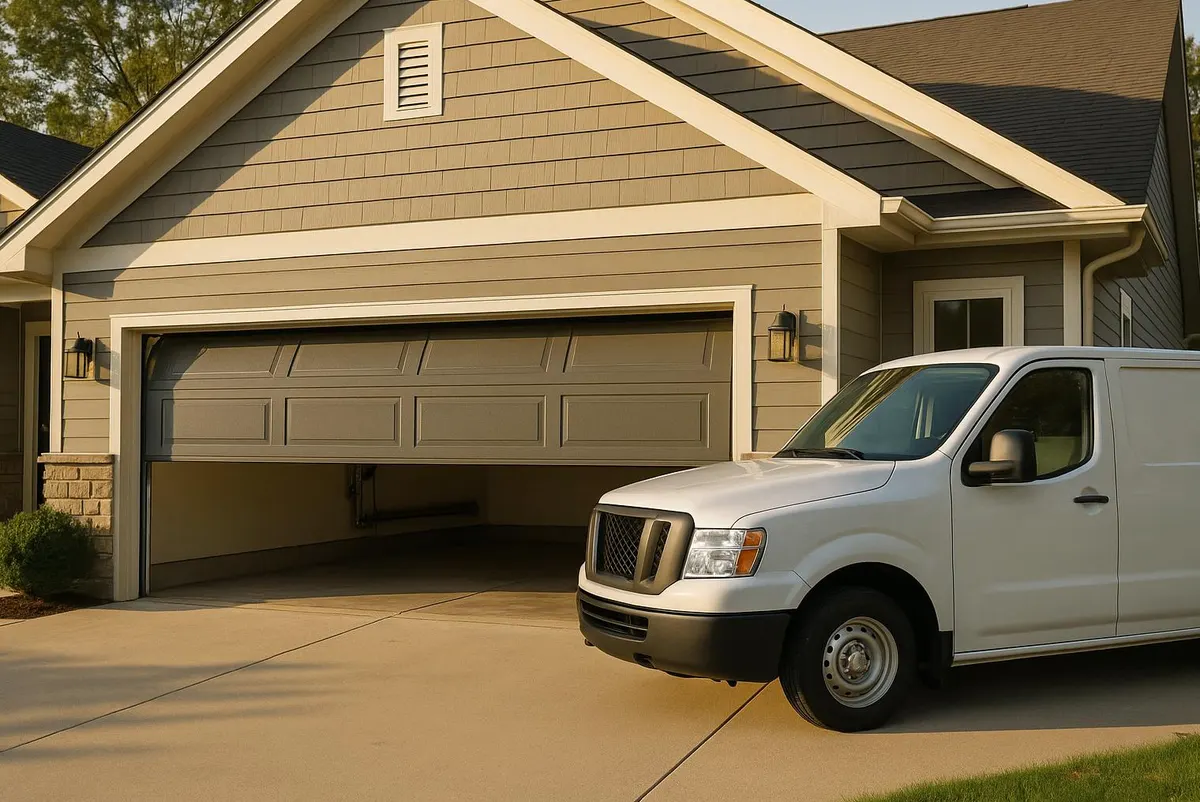
What a Technician Sees on the First Cold-Snap Call
Every year it's the same pattern. The door worked fine all through the humid summer storms, and then the first real cold front rolls through and the phone starts ringing. A homeowner says the opener is straining and groaning like it's lifting something twice as heavy. Or the door reverses halfway up for no obvious reason. Or there's a metal-on-metal grinding sound that wasn't there in September. Nine times out of ten, it's not a new problem — it's an old problem that cold weather just exposed. Grease that was fine at seventy degrees turns stiff at twenty. Metal contracts. Rubber cracks. A door that was limping along gets pushed past its limit the moment winter actually arrives.
The good news is that most of this is predictable, which means it's preventable if you get ahead of it now instead of waiting for the first hard freeze to find the weak spot for you.
Check the Springs Before the Cold Sets In
Garage door springs do almost all the lifting work, and they're under serious tension even on a mild day. Cold makes steel more brittle and less forgiving, which is why spring failures spike once temperatures drop and stay down. A spring that's been slowly wearing out all year is far more likely to snap in January than in July.
You can do a simple balance check yourself: with the door closed, pull the release cord to disconnect the opener, then lift the door manually about halfway. A properly balanced door will stay put on its own. If it drifts down or shoots up, the springs are compensating poorly and should be looked at before winter, not during it. Do not attempt to adjust or replace the springs yourself — they store enough tension to cause serious injury. This is one of those jobs where calling in a professional for spring replacement is the right call, not a shortcut.
Inspect Weatherstripping and Seals
The rubber seal along the bottom of the door and the strips along the sides are your main defense against snow, ice melt, and cold drafts getting into the garage. Over a year of sun, salt spray, and temperature swings, that rubber dries out, cracks, or pulls loose from the track. Once that happens, you'll see snow drifting in under the door during a storm, or find a thin skin of ice forming on the garage floor near the threshold on bitter mornings.
Bottom seals are inexpensive and reasonably straightforward to replace, and doing it in October beats doing it with cold hands in a snowstorm. While you're at it, check the seal where the door meets the frame on both sides — gaps here are also a favorite entry point for mice looking for a warm place to spend the winter.
Lubricate Rollers, Hinges, and Tracks
Hardware that was moving smoothly in warm weather can bind up once grease thickens in the cold. Hinges, rollers, and the track itself should get a light coating of a silicone or lithium-based garage door lubricant — not WD-40, which is a solvent and will actually strip lubrication over time rather than add it. While you're in there with a cloth and lubricant, give every hinge and bolt a wiggle. Months of door cycles and the occasional summer storm's wind vibration can work hardware loose without you noticing until something rattles or grinds.
Don't Ignore the Opener and Safety Sensors
Garage door openers don't love the cold any more than car batteries do. Motors can struggle, and if your opener runs on an older gear system, cold-thickened lubricant inside the unit can make it work harder than it should. This is also a good time to check that the safety sensors near the bottom of the tracks are clean and properly aligned — a sensor that's been bumped during a fall cleanup or knocked slightly by ice buildup can cause the door to refuse to close, or reverse unexpectedly.
If your opener doesn't have battery backup, it's worth considering before winter settles in. Ice storms and heavy snow loads around here are exactly the kind of weather that knocks out power, and a battery backup means you're not stuck outside trying to manually crank a door open in the dark.
Protect Against Salt, Slush, and Spring Thaw Down the Road
Road salt is hard on everything it touches, and your garage floor and lower door panel see plenty of it all winter as it drips off tires and boots. Wiping down the bottom section of the door and the tracks periodically through the season helps slow the corrosion that salt causes on metal hardware. It also sets you up better for the spring thaw, when melting snow and mud tend to reveal whatever damage winter was quietly causing underneath.
When to Call Hillsdale Garage Door
If your balance check comes back off, if you're hearing grinding or slamming, or if the door simply feels heavier than it used to, that's the point to call in a professional rather than keep adjusting things yourself. Hillsdale Garage Door offers seasonal garage door maintenance tune-ups that cover spring tension, hardware, and opener function in one visit, and we handle spring replacement safely when a spring is past the point of a simple fix. Catching these issues in October is a lot easier than troubleshooting them during a February cold snap with a door that won't budge.
If you're in Hillsdale, Jonesville, Litchfield, Reading, Camden, Pittsford, North Adams, or Waldron and want your garage door checked out before winter really sets in, give Hillsdale Garage Door a call. We'd rather get ahead of a problem now than meet you during an emergency call in the snow.